Refrigerator Defrost & Frosted Coils Repair
Thick white frost or solid ice forming on the back wall of your freezer? This indicates an inoperative automatic defrost cycle choking airflow. Call for emergency same-day component testing and restoration.
What causes thick frost and ice buildup on refrigerator freezer coils? Frost buildup indicates a breakdown in the automated defrost circuit. Every 8 to 12 hours, the refrigerator must activate an electric defrost heater. If the heater element burns out, the bi-metal termination thermostat fails open, or the adaptive defrost control board halts, frost accumulates uncontrollably, choking airflow and causing the fresh food compartment to warm.
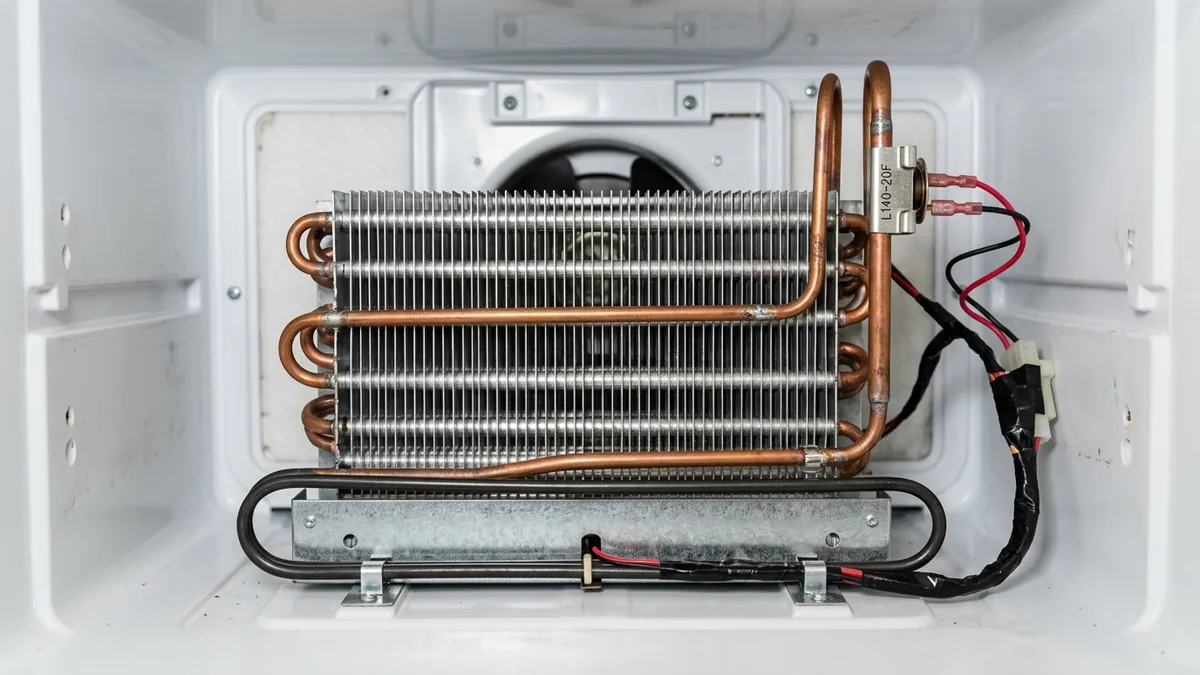
Figure 4.0: Electric defrost heating element and bi-metal thermostat tested for continuity.
The Auto-Defrost Breakdown Mechanism
In order to keep the evaporator coils cold enough to freeze water, the refrigerant inside them boils at approximately -15°F to -20°F. Because ambient air contains natural humidity, moisture instantly condenses and freezes as frost onto the cold aluminum fins whenever the doors are opened.
To prevent this frost from choking the airflow, every frost-free refrigerator cycles an electric heating element every 8 to 12 hours. This heater warms the coils to approximately 40°F, melting the frost into water droplets that drain safely into an evaporation pan under the refrigerator.
When any electrical component in this automated defrost loop fails, the melting cycle never occurs. Frost builds into a solid, impenetrable wall of ice within days, choking air channels and leaving your fresh food section warm.
View the Step-by-Step Airflow Triage Guide →
Figure 3.1: Visual comparison between normal light frost and a solid frozen ice block choking airflow.
The 4 Key Components in the Auto-Defrost Circuit
A failure in any single element breaks electrical continuity, causing frost to accumulate unchecked:
1. Defrost Heating Element
Constructed from an Incoloy metal sheath or quartz glass tube containing an electric Nichrome resistance wire. Mounted directly beneath the evaporator coils, it draws 350 to 600 Watts of heat. Over time, thermal fatigue causes the element wire to burn open. Technicians test continuity; a normal heater reads 20 to 45 Ohms.
2. Bi-Metal Termination Thermostat
A safety switch wired in series with the defrost heater. It remains closed at sub-freezing temperatures to allow the heater to energize. When the coil reaches 45°F to 55°F, the bi-metal disc flexes open, cutting power to prevent the plastic freezer liner from melting. If the bi-metal fails open, the heater never turns on.
3. Evaporator Thermistor
Modern electronically controlled refrigerators use a solid-state NTC (Negative Temperature Coefficient) thermistor to sense coil temperature. Resistance increases as temperature drops (e.g., 16.6 kΩ at 32°F, 5 kΩ at 77°F). Technicians test thermistor resistance curves against manufacturer charts.
4. Defrost Control Board / Timer
The brain of the defrost circuit. In older models, a mechanical motorized cam timer switches power every 8 hours. In modern models, an Adaptive Defrost Control (ADC) microcontroller calculates compressor run time, door opening counts, and ambient humidity to initiate defrost cycles on demand.
Interpreting Evaporator Frost Patterns
Removing the rear freezer wall reveals the true diagnostic story of the appliance:
Healthy Frost Pattern
A very light, even coating of white frost distributed uniformly across every aluminum fin and tube from top to bottom. This confirms proper refrigerant charge, healthy compressor pumping capacity, and normal defrost cycling.
Defrost System Failure
The coils are completely encased in a solid block of thick, opaque white ice. The ice has expanded into the fan shroud and clogged the drain trough. This is an electrical failure in the heater, bi-metal, or control board—NOT a gas leak.
Sealed System Gas Leak
A heavy ball of ice forms ONLY on the top inlet tube or top two coil rows, while the rest of the evaporator coils are completely bare and dry. This indicates loss of refrigerant charge or an inefficient compressor valve that cannot produce sub-zero boiling across the entire coil bank.
⚠️ Never Use Sharp Tools to Chip Away Ice
Homeowners often attempt to clear frozen coils using screwdrivers, butter knives, or ice picks. Refrigerator evaporator coils are manufactured from paper-thin aluminum alloy. A single slip will puncture the pressurized tube, venting all refrigerant into the room with a loud hiss. Puncturing the coil permanently ruins the sealed system, turning an inexpensive electrical repair into a total appliance replacement. Dispatched technicians exclusively use commercial low-pressure steam machines to safely liquefy ice blocks.
Common Questions About Frosted Coils & Defrost Repair
Melt the Ice & Restore Proper Cooling
Our technicians carry universal defrost heaters, bi-metal thermostats, and adaptive control boards.
Call +1 833-379-2204